
How to Become a Crypto Data Analyst: From SQL to Hired

Vincent Charles
June 1, 2026 · 14 min read

A lot of people enter crypto analytics from the wrong direction. They chase dashboards, tokens, or a single tool, then wonder why they still do not look hireable. If you want to understand how to become a crypto data analyst, start with the job itself: turning messy onchain and product data into decisions that matter for growth, product, risk, and operations.
Crypto data work is not traditional analytics with wallet addresses added on top. The best analysts in Web3 move between SQL, blockchain data models, protocol mechanics, and business context without getting lost in any one layer. They know where users actually come from, which wallets are valuable, what onchain behavior predicts retention, and why reported volume or activity is often misleading.
I have run data functions at a centralized exchange and at protocols, so this guide is written from inside the hiring side, not from the outside looking in.
TL;DR: SQL is still the screen, so if yours is weak nothing else matters yet. The fastest entry point is a centralized exchange, where deep DeFi knowledge is optional on day one. Protocols and infrastructure want visible proof of work: dashboards, writing, open source. Treat onchain metrics like TVL and wallet counts as claims to verify, not facts. And two or three deep Dune dashboards in one domain beat ten shallow ones.
What a crypto data analyst actually does
The role changes depending on the company. At an exchange, the work leans toward user funnels, attribution, compliance reporting, and revenue analytics. At a protocol, it centers on liquidity, governance participation, treasury flows, user cohorts, and smart contract interactions. At an infrastructure company, the focus shifts toward developer usage, API consumption, and ecosystem growth.
The common thread is interpretation. You query data, model it, visualize it, and explain it in business terms, across onchain datasets, offchain product analytics, and internal business data. In practice, you are often the person translating raw events into a view of what is actually happening.
That means the job is broader than many candidates expect. You are not only writing SQL. You are deciding which metrics are credible, where the data breaks, how wallet-level activity maps to user behavior, and which KPI framework a team should trust.
The difference the generic breakdown misses
Here is the part most guides get wrong. The bar to enter is not the same across these company types, and that single fact should shape your entire strategy.
To join a centralized exchange, you do not need deep blockchain or DeFi domain knowledge on day one. Exchanges are the biggest recruiters in the space, and they hire heavily from fintech, TradFi, Web2, and ecommerce. What they screen for is strong SQL, sharp analytical thinking, the ability to translate data patterns into business decisions, and composure under pressure. That makes a centralized exchange the most realistic entry point for someone crossing over from traditional data work.
Protocols and infrastructure companies are a different game. There you need solid DeFi or infra domain knowledge, and preferably visible involvement in the space. That means a Dune dashboard portfolio, a Substack or blog where you reason in public, and an active GitHub with open source contributions or your own projects. The domain fluency is not optional, because the work assumes it.
I wrote a shorter version of this same advice on the Web3 data analyst role page, and it holds up. Start at an exchange if you are coming from TradFi or Web2 with strong SQL and Python. Build a public onchain portfolio first if you want to go straight to protocols.
How to become a crypto data analyst without wasting a year
The fastest path is not to learn everything. It is to build a stack of skills that companies can recognize quickly.
Start with SQL. If your SQL is weak, nothing else matters yet. Most crypto analytics hiring still uses SQL as the core screen because it reveals how well you think about joins, aggregations, event-level logic, and edge cases. You should be comfortable with CTEs, window functions, case statements, date handling, deduplication, and writing readable queries under pressure.
Then learn basic data modeling. A lot of junior candidates can write one query but cannot structure data well enough for repeatable analysis. You need to understand fact tables, dimensions, grain, sessionization, cohort logic, and the difference between a quick query and a reliable metric definition.
After that, add blockchain-specific literacy. You do not need to become a smart contract engineer, but you do need to understand wallets, transactions, tokens, gas, transfers, logs, traces, DEX activity, bridges, and how common protocol actions appear in data. If you cannot explain the difference between a user, a wallet, and a contract interaction, you will struggle in interviews and in the work itself.
Finally, learn to communicate findings. A strong crypto analyst writes clearly, frames trade-offs, and does not hide behind charts. Teams hire analysts to reduce ambiguity. If your work is technically correct but hard to interpret, it will not carry much weight.
The core skill stack you need
There is a practical order here.
1. SQL and query thinking
This is your foundation. You should be able to inspect a blockchain dataset and figure out what needs to be cleaned, grouped, or joined before any metric becomes trustworthy. Crypto data often contains duplicates, bot noise, routing contracts, fragmented identities, and inconsistent token labels. Querying the raw table is rarely enough.
A word on how this gets tested, because it surprises people. Some companies still run live coding exams, where you write SQL on the spot while someone watches. I think it is a somewhat toxic holdover from the last decade, but it has not disappeared, so be ready for it. Practice timed problems on a site like DataLemur and train yourself to reason in blockchain terms while you do: transactions, logs, smart contract calls, token transfers.
Most reasonable companies have moved to take-home assignments instead, which reward clear thinking over performance anxiety. But there is only one way to find out which one you will face, and that is to apply.
2. Spreadsheet and BI fluency
Even in crypto-native teams, a lot of business decisions still happen in spreadsheets and dashboards. You should know how to build clean reporting views, sanity-check outputs, and present trends without overcomplicating the story. Tools vary, but the underlying skill is consistent: make data usable.
3. Blockchain data intuition
This is where many traditional analysts hit friction. Onchain data is transparent, but that does not mean it is simple. A spike in wallet activity could mean real growth, sybil farming, wash behavior, or one contract changing execution patterns. Good analysts treat visible data carefully and ask what the metric is actually measuring.
4. Product and business judgment
The best crypto data analysts are not tool specialists. They are problem solvers. They know when TVL matters, when it does not, and how to connect user behavior to retention, monetization, incentives, and protocol health.
Which tools matter most
You do not need every tool in the market. You need enough depth in a few categories to show that you can operate in a real team.
Dune is still one of the clearest ways to learn public onchain analysis and build a visible portfolio. Allium can also be useful when you need broader, cross-chain coverage. Beyond that, you should understand at least one warehouse environment and one BI workflow. If you are aiming for full-time roles, experience with dbt, event-based analytics setups, and dashboarding tools makes you much more credible.
The trade-off is simple. Public platforms are great for learning and visibility, but internal jobs often require more than public dashboards. Employers want analysts who can work with messy proprietary data, define metrics consistently, and build repeatable reporting. So use public tools to get in the door, not as the endpoint.
Why onchain metrics lie, and how good analysts catch it
The single most valuable habit in crypto analytics is refusing to take a headline metric at face value. I have watched the same movie play out across cycles, and it usually starts with a number that looks like growth but is not.
Total value locked is the classic example. TVL on its own tells you almost nothing about whether a protocol is healthy. During DeFi Summer, projects rented their TVL by throwing yield at users, creating liquidity with zero loyalty that left the moment yields dropped a fraction of a percent. The pattern even has a name: mercenary capital. The data backed it up. Pioneers like Balancer, Compound, and Curve saw heavy TVL declines from their peaks, which is not a market correction so much as evidence of a growth model that was broken from the start.
The same trap shows up in user growth. Raw wallet counts go up and a team celebrates, without ever asking about wallet quality. A spike in active addresses can mean real adoption, sybil farming, wash activity, or one contract changing how it executes. Your job is to know which.
I went deeper on this in Beyond Vanity Metrics, but the short version is the mindset that separates strong crypto analysts from the rest. Every onchain metric is a claim, and your job is to verify it before anyone builds a decision on top of it.
Build a portfolio that proves you can think
If you are serious about how to become a crypto data analyst, your portfolio matters more than your course certificates.
Most hiring managers do not need five generic dashboards on token transfers. They want to see whether you can ask a sharp question, choose the right dataset, define the metric carefully, and explain the result with nuance.
Here is what I would actually build if I were trying to get hired today.
Pick one domain and build two or three Dune dashboards in it. Depth in a domain reads as expertise. Breadth across random tokens reads as a tutorial.
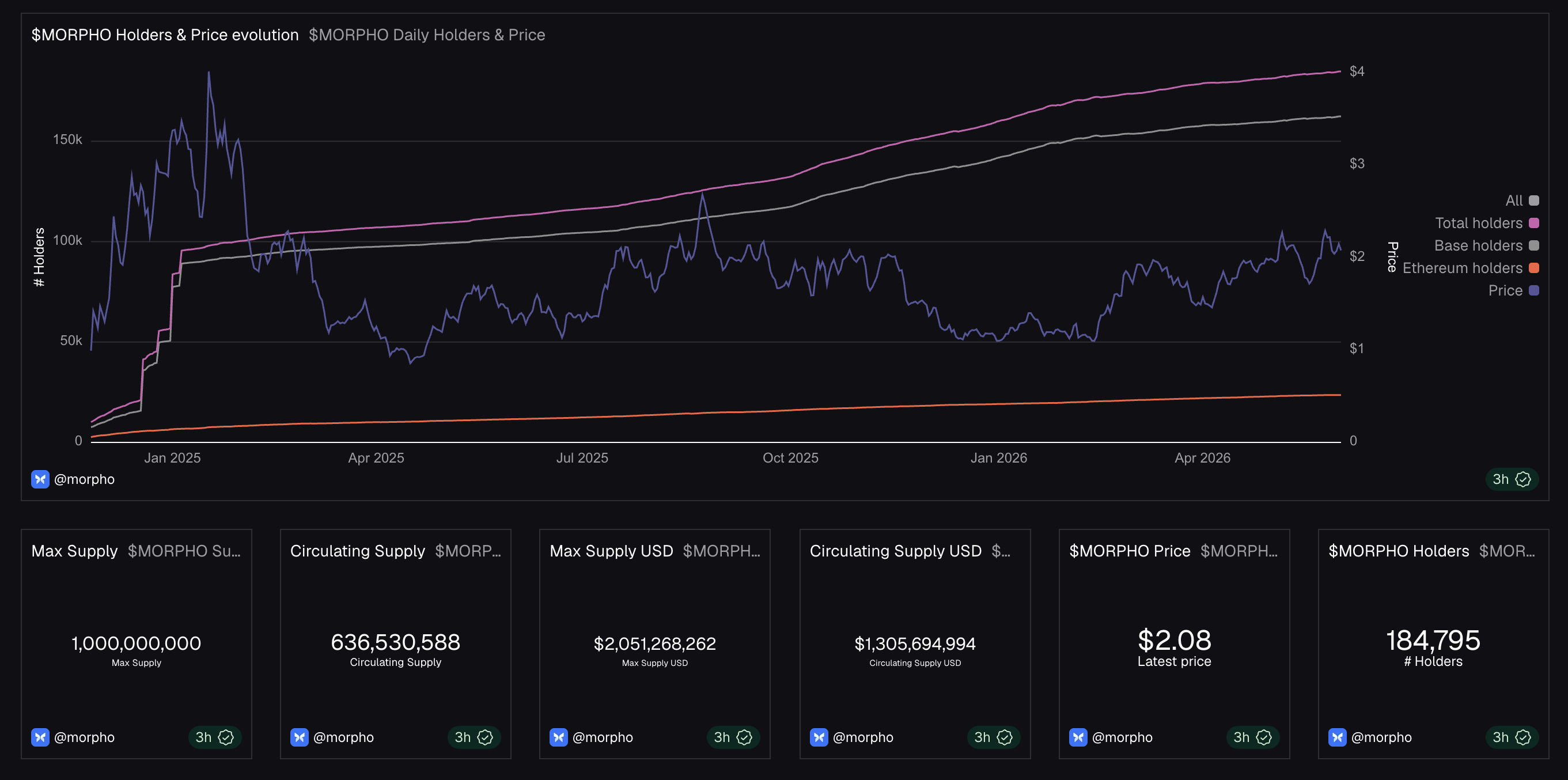
If you are targeting DeFi, build something on lending. For a sense of the bar to clear, look at the Morpho dashboard I built while leading the data function there, covering EVM lending activity.
If you want to work on Solana, study the top dashboards first, then find newer protocols or fresh angles the obvious ones miss. As a reference, here is the Orca top whirlpools dashboard I built for a leading Solana DEX.
If you are drawn to newer ecosystems, the same approach works. Here is one I built comparing lending on Sui, Navi versus Suilend.
Then write. A Substack or blog post that walks through your methodology, states your assumptions, and frames the trade-offs does something a dashboard cannot. It proves you think in frameworks. My vanity metrics piece is the kind of thing I mean.
Good portfolio work always includes assumptions, caveats, and interpretation. If your chart goes up, explain why that may or may not matter. If you excluded certain addresses, say so. If a router or a bot could distort your metric, show that you saw it coming. Two or three strong projects beat ten shallow ones. Depth signals judgment.
How to get hired when you do not have crypto experience yet
This is the hard part, but it is not random.
If you come from traditional data analytics, position yourself around transferability first and crypto specialization second. Emphasize SQL, experimentation, stakeholder reporting, funnel analysis, segmentation, and metric design. Then show how you have applied those skills to onchain questions through portfolio work.
If you are earlier in your career, reduce employer risk. That means showing consistency, not just enthusiasm. Publish analyses. Write clean documentation. Rebuild known protocol metrics and explain your methodology. Comment on what is misleading in common dashboards. Credibility in Web3 comes from proof of work, but proof of work has to be relevant.
It also helps to target the right companies. Some teams want a pure onchain research profile. Others need someone closer to product analytics, growth analytics, compliance analytics, or data ops. Candidates often fail because they pitch themselves as a generic crypto analyst to roles that are much more specific.
A specialized platform like Unchain Data can help here because the market is fragmented and role titles are inconsistent. A Web3 data analyst job at one company may look more like analytics engineering at another, and a growth analytics role may require heavy onchain fluency.
Common mistakes that slow people down
The first mistake is over-indexing on crypto opinions instead of analytics skill. Nobody hires you because you are active on social media or know the latest narrative. They hire you because you can produce reliable analysis.
The second is staying too shallow technically. Watching tutorials is not enough. If you cannot write and debug real queries, you are not close.
The third is treating onchain data as self-explanatory. It is visible, but it is full of interpretation traps. Wallet counts, transaction counts, and protocol interactions can all mislead if you do not understand the mechanics behind them.
The fourth is building a portfolio with no business angle. A dashboard that looks polished but answers no meaningful question will not stand out.
A realistic 90-day path
In the first 30 days, focus almost entirely on SQL and blockchain data structure. Learn how transaction tables, event logs, token transfers, and address labels work. Rebuild simple analyses from scratch until the schema feels familiar.
In days 31 to 60, create one serious portfolio project. Pick a protocol or product question that has business relevance, not just market curiosity. Write the analysis like you are presenting it to a head of product or growth lead.
In days 61 to 90, build a second project with a different angle, then start applying. At that point, your energy should shift toward interview readiness, role targeting, and sharpening how you explain your work. Most candidates wait too long to test themselves against real job requirements.
The best path into crypto analytics is not glamorous. It is skill density, domain fluency, and visible work that holds up under scrutiny. If you can become the person who turns noisy blockchain activity into decisions a team can trust, you will not need to force your way into the market. You will already be doing the job before someone gives you the title.
Frequently Asked Questions
Do I need to code smart contracts to become a crypto data analyst?
No. You need to read and reason about onchain data, not write Solidity. Understand wallets, transactions, logs, token transfers, and common protocol actions well enough to query them reliably. The job is interpreting smart contract activity in data, not deploying contracts yourself. Domain literacy matters far more than engineering depth.
Is a centralized exchange or a protocol easier to get hired at?
A centralized exchange is usually the more realistic entry point. Exchanges hire heavily from fintech, TradFi, and Web2, and screen mainly for SQL and analytical ability, so deep DeFi knowledge is optional at first. Protocols expect existing domain fluency and visible proof of work like dashboards and public writing before you apply.
How long does it take to become a crypto data analyst?
With strong existing SQL, a focused 90-day plan is realistic: roughly 30 days on blockchain data structure, 30 days building one serious portfolio project, and 30 days on a second project plus applications. If you are starting SQL from scratch, expect longer. Skill density matters more than time spent.
Which tools should a crypto data analyst learn first?
Start with SQL and Dune, since both let you learn onchain analysis and build a public, visible portfolio at the same time. Add Allium for broader, cross-chain coverage, then one data warehouse and one BI workflow. For full-time roles, familiarity with dbt and event-based analytics setups makes you noticeably more credible.
Key Takeaways
- SQL is the screen. It is the most requested skill and the most common interview filter. Get fluent before anything else.
- Start at a centralized exchange if you are crossing over from TradFi or Web2. Deep DeFi knowledge is optional on day one there.
- Protocols want proof of work. Dune dashboards, public writing, and open source matter more than a resume.
- Treat every onchain metric as a claim. TVL and wallet counts mislead constantly. Verify before anyone builds a decision on them.
- Depth beats breadth in a portfolio. Two or three serious dashboards in one domain outperform ten shallow ones.
We keep free learning resources if you want structured practice on the SQL and blockchain data side.
- Founder of Unchain Data
- Former data lead at Morpho Labs and Binance
- Builds Dune dashboards and data pipelines across Ethereum, Solana and Sui
- Advises VC funds and DeFi protocols on data strategy
- Featured on BBC for blockchain data research
Ready to practice what you just read?
WizardCamp has interactive SQL exercises on real blockchain data. Write queries, get instant feedback, earn certificates.
Explore WizardCamp